
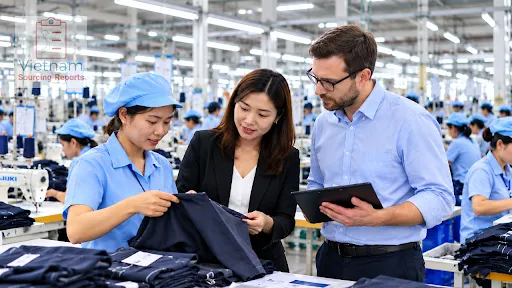
Sourcing Agent Vietnam | Costs, Pros, Cons & Other Options
Sourcing products from Vietnam can help businesses diversify their supply chains, explore manufacturing opportunities, and find suppliers suited to their production needs. However, identifying reliable factories, comparing quotations, and verifying manufacturing capabilities can take considerable time. A sourcing agent Vietnam importers hire can help coordinate these activities, but professional assistance is not the only option.
Understanding the costs, benefits, and alternatives can help you decide whether to hire an intermediary or research manufacturers directly. The right approach depends on your budget, product requirements, internal resources, and the level of support your business needs.
What Does a Sourcing Agent in Vietnam Do?
A sourcing agent acts as an intermediary between international buyers and manufacturers. Depending on the agreement, the agent may help identify suppliers, negotiate prices, coordinate samples, monitor production, and arrange quality inspections.
Typical responsibilities include:
Supplier identification: Finding manufacturers that produce the required products and meet your initial purchasing criteria.
Supplier verification: Reviewing available business information, production capabilities, and relevant certifications.
Price negotiations: Discussing quotations, minimum order quantities (MOQs), payment terms, and production timelines.
Sample coordination: Arranging samples so buyers can evaluate materials, workmanship, and product specifications.
Quality control: Organizing inspections to check products against agreed requirements.
Production follow-ups: Communicating with factories about progress, potential delays, and outstanding issues.
Not every agent provides all these services. Some focus on supplier introductions, while others offer ongoing procurement and production management. Before hiring a provider, confirm exactly what is included in the agreement and which responsibilities remain yours.
How Much Do Sourcing Agents in Vietnam Cost?
Understanding sourcing agent fees is important when calculating the total cost of purchasing products from Vietnam. Pricing varies according to the agent's responsibilities, order value, product complexity, and duration of engagement. There is no universal fee that applies to every sourcing project.
Common pricing arrangements include:
Percentage-based commissions: The agent receives an agreed percentage of the purchase order value.
Fixed project fees: A predetermined charge covers specific activities, such as supplier research or factory verification.
Monthly retainers: Recurring payments cover ongoing supplier communication and production coordination.
Separate service charges: Factory visits, inspections, laboratory testing, sample shipping, and travel may be billed independently.
Request an itemized quotation before committing to any arrangement. Ask whether the agent receives commissions from manufacturers, whether those payments are disclosed, and whether the proposed fee includes follow-up support.
Also consider the cost of sourcing independently. Your team may need to invest time in researching factories, verifying business information, requesting quotations, reviewing samples, and coordinating communication.
The cheapest option is not necessarily the most economical. Evaluate the total cost alongside the services provided, the time required, and the risks associated with your product and supplier requirements.
Pros of Hiring a Sourcing Agent
Working with experienced Vietnam sourcing agents can simplify procurement, particularly for businesses that are unfamiliar with the local manufacturing landscape.
Key benefits include:
Local market knowledge: An experienced agent may understand supplier networks, manufacturing practices, and industry-specific requirements.
Time savings: Delegating supplier research and communication can free your team to focus on other business priorities.
Communication support: Local language skills and familiarity with business practices may help reduce misunderstandings.
Negotiation assistance: An agent can help compare quotations and discuss commercial terms with prospective manufacturers.
Production coordination: Ongoing follow-ups can help identify delays or specification issues before they become more difficult to resolve.
These benefits depend on the provider's experience, transparency, and actual involvement in your project. An agent does not automatically guarantee competitive pricing, consistent quality, or on-time delivery.
Potential Drawbacks of Hiring an Agent
Although an intermediary can simplify sourcing, it also introduces additional costs and another party into your supply chain.
Consider these potential disadvantages before making a decision:
Reduced profit margins: Service charges can affect profitability, particularly for smaller orders or products with tight margins.
Limited transparency: Some arrangements may not provide complete visibility into supplier quotations or commission structures.
Conflicts of interest: Undisclosed payments from manufacturers could influence supplier recommendations.
Variable service quality: The experience and capabilities of agents differ, making independent evaluation important.
Supplier dependency: Relying entirely on an intermediary may limit direct communication and long-term relationships with manufacturers.
You can reduce these risks by checking references, requesting written quotations, clarifying contractual responsibilities, and retaining access to relevant supplier records. Make sure quality expectations, payment terms, confidentiality requirements, and reporting arrangements are documented before production begins.
Alternatives to Hiring a Sourcing Agent
Hiring an intermediary is not necessary for every business. Depending on your experience, order volume, and available resources, other sourcing methods may be more suitable.
1. Source Directly From Manufacturers
Direct sourcing allows buyers to communicate with factories, negotiate prices, request samples, and build supplier relationships without relying on an intermediary.
This approach may suit businesses with established procurement teams or experience importing products. However, buyers must be prepared to research manufacturers, verify credentials, assess production capabilities, and coordinate quality control independently.
2. Use B2B Marketplaces and Trade Fairs
Online supplier directories and industry exhibitions can help you discover potential manufacturers and compare their offerings. These channels can be useful for identifying companies that produce your required products.
However, an online listing or trade fair introduction does not establish that a supplier is suitable. Request detailed quotations, check available business information, evaluate samples, and verify production capabilities before placing a substantial order.
3. Research Manufacturers Through Factory Sourcing Reports
Factory sourcing reports provide another option for businesses that want to identify manufacturers without immediately hiring an intermediary.
Vietnam Sourcing Reports offers industry-specific reports designed to help buyers discover potential manufacturers. Its reports include company names, factory addresses, contact details, websites where available, products manufactured, and additional notes about factory capabilities and export experience.
This information can help buyers narrow their search and contact prospective suppliers directly. Instead of beginning with a broad online search, you can review manufacturers relevant to your product category and evaluate which companies merit further investigation.
However, a report is a starting point for supplier research, not a substitute for due diligence. Buyers should confirm current capabilities, request quotations, evaluate samples, and establish their own quality and compliance requirements.
4. Build an In-House Sourcing Team
Businesses with regular purchasing requirements may benefit from hiring procurement professionals or establishing a local team. This can provide greater direct oversight of supplier relationships, production schedules, and quality requirements.
The trade-off is the investment required for staffing, training, travel, and ongoing operations. For businesses with occasional orders, maintaining an in-house team may be less practical than using existing supplier information and managing selected activities internally.
How to Choose the Right Sourcing Approach
Choosing a sourcing agent Vietnam businesses can rely on requires evaluating the support offered, total costs, supplier transparency, and the level of control your business wants to retain.
Hiring an agent may be appropriate if you are entering Vietnam for the first time, sourcing complex products, managing multiple factories, or lacking the resources to coordinate production independently.
Direct sourcing or factory report research may be more suitable if you want to establish manufacturer relationships, manage negotiations yourself, and have the capacity to evaluate suppliers.
Before deciding, consider these questions:
What product specifications, materials, and quality standards must the manufacturer meet?
What minimum order quantities and production capacities are acceptable?
Do you need ongoing production management or primarily help identifying factories?
Can your team independently evaluate quotations, samples, and supplier credentials?
Which approach offers the best balance of cost, control, and time?
If you decide to work with a Vietnam sourcing company, review its service scope, pricing structure, references, and contractual terms. Confirm whether it provides supplier introductions only or also manages inspections, production, and shipping coordination. These distinctions can significantly affect the overall cost and value of the arrangement.
Make Your Vietnam Sourcing Decision With Confidence
Choosing between an agent, a sourcing company, and direct manufacturer sourcing requires more than comparing service fees. Consider the time involved, your internal capabilities, product complexity, supplier requirements, and the level of control you want over procurement.
Vietnam Sourcing Reports helps buyers discover potential manufacturers through industry-specific factory sourcing reports. For businesses exploring a sourcing agent Vietnam alternative, these reports provide company and contact details alongside information about products manufactured and factory capabilities, giving buyers a practical starting point for researching suppliers and contacting manufacturers directly.
Explore Vietnam Sourcing Reports to browse factory sourcing reports by industry and identify potential manufacturers for your business. Review relevant supplier information, contact suitable manufacturers directly, and conduct due diligence before placing an order. Start exploring factory sourcing reports to find potential manufacturing partners for your next sourcing project.

